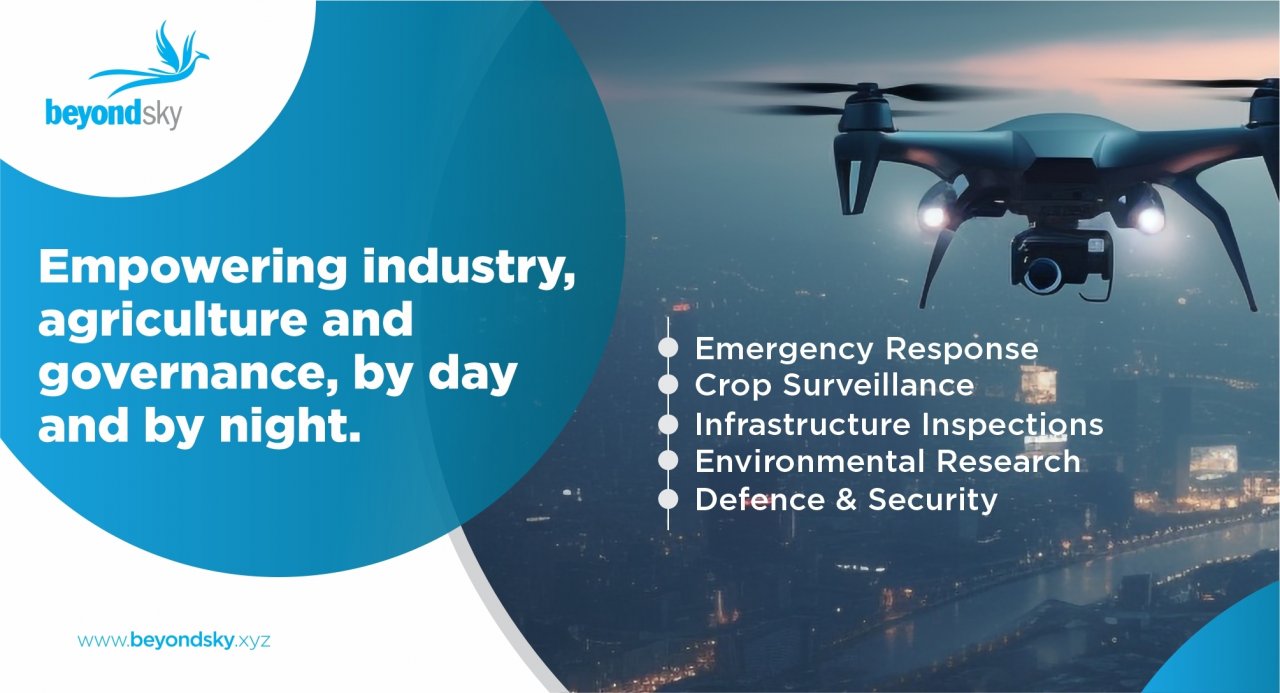
In low light and at night drone operations become highly challenging, and grasping the key intricacies of nighttime drone use is key to a successful recce, drop or survey.
Why are drones flown at night?
Night flying could be for a specific purpose - an inspection of night activated infrastructure, mapping traffic flows, or a strategic effort. The quiet, low-traffic environment opens doors for efficiency in many fields:
- Aerial Photography & Videography: Night shoots capture illuminated architecture, festivals, cityscapes, traffic or lightning storms, offering cinematic angles unavailable during the day.
- Emergency Response: Fire, police, and search and rescue teams deploy drones at night for active incident imaging, thermal scanning for missing persons, or atmospheric hazard assessment.
- Agriculture: Drones assess nocturnal crop activity, irrigation patterns, and pest populations with minimal daytime disruption.
- Infrastructure Inspections: Bridges, railways, and utilities are checked at night, avoiding interference from daytime foot or vehicle traffic and allowing for more detailed scanning with specialized sensors.
- Environmental Research: Scientists use drones to monitor nocturnal wildlife, study light pollution, and gather data in habitats that are inaccessible or too hazardous by day.
Commercial night drone operators are increasingly recognizing the reduced radio interference, clearer airspace, and unique visibility advantages after sunset, provided that safety and compliance are strictly observed.
Unique Challenges of Night Flying
Night flights differ from daylight operations in ways that require extra preparation and specialized technical awareness:
- Reduced Visibility: Even with anti-collision and navigation lighting, depth perception and spatial tracking are diminished. Shadows and light can distort distance or obscure hazards.
- Spatial Awareness Issues: Judging orientation, altitude, and distances on screens becomes harder without strong ambient light.
- Accelerated Battery Drain: Lower nighttime temperatures may impact battery chemistry (especially LiPo cells), reducing voltage and overall flight time. Pre-warming batteries or using temperature-resistant packs helps mitigate risks.
- Wildlife Interactions: Drones can disturb bats, owls, and other nocturnal wildlife. Strong LED lights disorient animals; collisions are more likely.
- Signal Interference: Urban night flights face increased RF noise from lighting systems, public events, and telecommunications.
Technical solutions include advanced collision avoidance sensors, reliable GPS/GLONASS tracking, and intelligent flight controller updates. Night mode settings, available on new drones, adjust LED intensity, camera exposure, and navigation parameters for twilight and darkness.
Legal Regulations for Night Drone Flights
Operators must understand country-specific rules to avoid hefty fines, license suspension, and increased liability. Here are key requirements in major regions:
|
Region
|
Night Flight Policies
|
Lighting Standards
|
Licensing
|
|
United States
|
Permitted under FAA Part 107 night training; anti-collision lights visible for 3 miles; VLOS
|
Strobe/LED, 40–100 flashes/min
|
Part 107, night endorsement
|
|
Europe (EASA)
|
“Specific Category”; risk assessments, possible waivers
|
Bright omnidirectional lights
|
Operator registration
|
|
India (DGCA)
|
Recreational flights prohibited; commercial allowed with permit and risk assessment
|
Strong, visible lighting mandatory
|
Special permission
|
|
Canada
|
Advanced operations or Special Flight Operations Certificate (SFOC) required
|
High-intensity lighting
|
SFOC
|
|
Australia
|
CASA rules; strong lighting, observer, safety plan required
|
Anti-collision and navigation lights
|
CASA remote pilot license
|
|
France
|
Prohibited except by specific DGAC authorization; strict exemption needed even for professionals
|
Anti-collision lights (flashing green light) visible, typically at least 150m; must meet EU spec if authorized
|
DGAC/AlphaTango permit required
|
|
UK
|
Night flying permitted (except where local restrictions apply); must maintain VLOS; adhere to airport and site rules
|
Anti-collision lights required for night flights; must be visible and aid safe operation
|
Flyer ID, Operator ID, specific permissions for certain categories
|
It is critical to check with local aviation agencies for current and constantly changing rules. Permits, flight logs, and real-time airspace maps (e.g., DJI's GEO Zones, and Airmaps, etc.) should be verified before flight.
Required Training for Flying Drones at Night
To conduct night flights safely and effectively, operators must undergo training in these technical areas:
- Night Vision Awareness: Pilots shall be trained to understand how human vision adapts in low light, how glare reduces visibility, and how spatial illusions can occur in darkness.
- Lighting Systems: Correct use of lighting is required. Anti-collision strobes and navigation lights must comply with brightness and flash standards while being positioned to avoid interference with onboard cameras.
- Sensor Proficiency: Operators should be trained to configure and operate thermal cameras, LiDAR, and other sensors in dark environments, ensuring integration with flight control systems.
- Instrument-Based Flying: Flying by telemetry to be practiced, with pilots relying on GPS, IMU, and altitude indicators since visual references are limited at night.
- Emergency Procedures: Pilots must be capable of executing emergency protocols, including rapid recovery from battery drops, GPS errors, or signal loss during night missions.
- Team Coordination: Night operations require effective teamwork. Visual observers should be trained to maintain line-of-sight while communication protocols are strictly followed.
- Post-Flight Analysis: All flight data has to be reviewed after missions to identify anomalies, interference, or irregular battery performance, enabling continuous safety improvements.
Drone Setup and Lighting Requirements
Lighting isn’t just for visibility; it's a legal safety requirement and a technical solution to a key operational challenge.
Anti-Collision Lights
- Must be visible from at least 3 statute miles (FAA).
- Should flash at 40–100 times per minute.
- Place lights on top, undersides, and sides for full coverage.
- Consider high-powered strobe LEDs, visible in fog or light rain.
Navigation Lights
- Green (right), Red (left), White (rear) for orientation.
- Factory lights may not meet regulatory intensity—consider aftermarket kits.
- Adjust navigation light brightness for camera work to avoid glare.
Additional Tech
- Infrared and Thermal Cameras: For inspections or rescue, can “see” heat signatures; not affected by visible light limitations.
- LiDAR and Ultrasonic Sensors: Enhance obstacle detection where optical sensors struggle.
- Customizable Lighting Controllers: Some modern drones let users program lighting patterns or strobing based on status or emergency triggers.
Essential Pre-Flight Procedures
- Verify Operational Lights: Inspect and charge all LEDs/strobes before every flight.
- Propulsion & Firmware Checks: Update flight control software for night mode features; inspect motors and props for low-light damage.
- GPS Home Point: Set at a clear and visible landmark and program “Return-to-Home” (RTH) altitude to clear any nighttime-only obstacles.
Always carry backup batteries and lighting kits as nighttime batteries may drain unpredictably, and dark landings can be hazardous.
Safety Tips for Flying a Drone at Night
Pilots who excel at night flying use specialized strategies:
- Plan Your Flight Path: Use mapping software to chart landmarks, hazards, and emergency zones.
- Employ a Visual Observer: A second person is invaluable for tracking in the dark, maintaining VLOS, and identifying threats.
- Check Lighting Systems: Inspect, test, and charge every lighting unit before launch.
- Fly Slower and Lower: Reduce speed for longer reaction time; stay close to home for safer retrieval.
- Avoid Crowds and Events: Night flights can cause panic; stick to open areas.
- Monitor Weather Closely: Fog, dew, and sudden rain are harder to spot; check conditions with multiple sources.
- Practice Emergency Procedures: Have protocols for unplanned landings, signal loss, or battery emergency.
- Train in Daylight: Build proficiency before tackling darkness.
- Upgrade Sensors: LiDAR and infrared equipment greatly enhance situational awareness.
- Log Your Flights: Maintain detailed records for accountability and troubleshooting.
Additional Tips
- Set Geofences: Virtual boundaries help prevent straying into hazardous areas.
- Use On-Screen Telemetry: Real-time overlays of altitude, battery, GPS status and obstacle sensors keep you informed.
- Optimize Camera Settings: Manual focus, low ISO, and stabilizing gimbals reduce image blur.
- Prewarm Batteries: Store batteries above room temperature before flying on cold nights.
Remember this golden rule: If visibility, control, or airspace safety is uncertain, abort the flight.
Real-World Use Cases for Night Drones
Night drone flights provide essential advantages across industries:
- Law Enforcement: Thermal drones pinpoint suspects or missing persons amid dark terrain; rapid deployment and real-time video inform tactical decisions.
- Power/Energy Sector: Detect overheating on lines or transformers before failures occur, with minimal daylight disruption.
- Search & Rescue: Locate survivors in disaster zones, where night thermal imaging proves invaluable.
- Construction & Infrastructure: Survey projects without disturbing daytime shifts, using advanced cameras for documentation.
- Wildlife Management: Track nocturnal animals with infrared mapping; minimize harm with silent multi-
These operations save lives, cut costs, and advance research all under night and extreme low-light conditions.
Technical Insights for Night Drone Mastery
Integrating more technical depth elevates both safety and success:
- Sensor Integration: New drones use multi-sensor fusion combining GPS, barometers, IMUs, LiDAR, and radar, allowing uninterrupted stability where light is low.
- Advanced Flight Apps: Mission planning software schedules night flights, sets waypoints, programs speed, and automates landing to minimize risk.
- Night Optimized Firmware: Enable or download firmware features designed for nocturnal navigation, like adaptive lighting, obstacle avoidance, and home-point calibration.
- Telemetry Management: Onboard logs and ground station software track every input, error, and battery fluctuation use this data to refine future missions.
Ethical and Community Responsibility
Night drone flights can invade privacy, alarm residents, or disrupt wildlife. So, when flying at night, take these points into consideration:
- Seek Authorization: Notify local authorities or property owners before flights; avoid flying over private spaces.
- Respect Wildlife: Maintain distance from animal habitats and nesting sites.
- Engage with Community: Inform local communities of routine operations, build trust, and answer concerns about safety and privacy.
- Review Flight Data: Analyze recordings for unintentional privacy violations before public sharing.
Responsible operation ensures positive public perception and long-term access for all pilots.
Conclusion
Flying drones at night combines opportunity and demands greater responsibility. Whether capturing unforgettable cityscapes, saving lives, or inspecting complex infrastructure, night operations deliver unmatched benefits for those willing to prepare. Addressing visibility challenges, legal regulations, battery management, and wildlife protection is not optional; it’s at the core of safe and ethical flight. So, when night falls make sure you fly smart and safe!
FAQs
1. Why do operators choose to fly drones at night?
Night flights allow inspections and tasks with less disruption, such as monitoring night-activated infrastructure, emergency response, nocturnal wildlife research, and capturing unique aerial photography with illuminated scenes. The quieter environment and lower air traffic also improve operational efficiency.
2. What are the key challenges when flying drones at night?
Reduced visibility affects depth perception and spatial awareness, battery performance can decline in colder night temperatures, signal interference may increase, and nocturnal wildlife can be disrupted. Pilots must mitigate these with specialized lighting, sensors, and careful planning.
3. What legal regulations apply to night drone flights?
Night flying rules vary globally—most regions require visible anti-collision lighting, operator licensing or endorsements, and sometimes special permits or risk assessments. Operators should always verify country-specific regulations before flying.
4. How should drones be equipped for safe night operation?
Drones must have anti-collision lights visible from at least 3 miles (flashing 40–100 times/min), navigation lights for orientation, and can benefit from infrared or thermal cameras plus obstacle sensors like LiDAR for improved safety in low light.
5. What best practices ensure safe and effective nighttime drone flights?
Plan flight paths carefully, use visual observers, check all lighting before flight, fly slower and lower, avoid crowds, monitor weather closely, warm batteries beforehand, and practice emergency procedures such as controlled landings and signal loss responses.


 English