When it comes to powering a drone or any unmanned aerial vehicle (UAV), Drone batteries are one of the most important components. They determine how long your UAV / Drone can stay in the air, how much weight it can carry, and how reliable it is for the purpose.
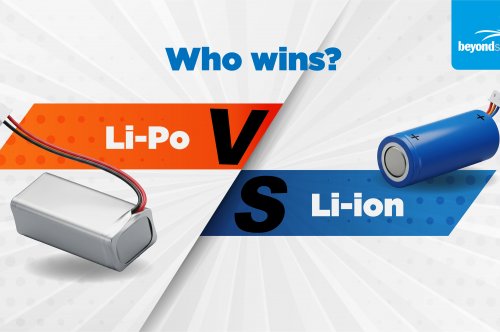
Among the many options available, LiPo drone batteries (Lithium Polymer) and Lithium-ion drone batteries are the two most preferred UAV batteries. Each has its own strengths, weaknesses, and best-use scenarios which are important to understand to get the best out of your UAV/drone.
Let us explore the fundamental differences between LiPo drone batteries and Lithium-ion drone batteries, the pros, and cons, and know some tips on how to choose the right Drone batteries for your UAV/drone.
UAV Battery Specifications – The fundamentals
Understanding drone battery specs helps us choose the right one for a UAV/drone. Below are the key terms:
- Voltage (V) : This is the force of electricity - a higher voltage gives your drone more power; but we need to ensure it matches the value specified for the drone/UAV to avoid damage.
- Capacity (mAh or Ah) : This tells us how much energy the battery can store, measured in milliamp-hours (mAh) or amp-hours (Ah). A higher capacity indicates longer flying time.
- Discharge Rate (C-Rating) : This is the rate at which the battery releases its power. A higher C-rating supports faster flying or heavier loads. This rating is preferred for racing drones or drones carrying cameras and sensors.
- Energy Density (Wh/kg) : This is a measure of the energy the battery holds per kilogram of weight. Higher energy density means more flight time without adding too much weight to the drone.
- Cycle Life : This indicates the number of times the battery could be recharged and used, before its performance drops.
- Form Factor : This denotes the size and shape of the battery. It needs to fit inside your drone, especially if the drone is small or custom-built.
How to Read a UAV Battery Label
Here is a common battery label: “LiPo 4S 14.8V 1500mAh 75C”
- LiPo: This means the battery uses Lithium Polymer chemistry.
- 4S: The battery has four cells connected in a series. Each cell is around 3.7 volts.
- 14.8V: This is the total voltage of the battery.
- 1500mAh: This shows the battery’s capacity. It can deliver 1500 milliamp-hours of power.
- 75C: This is the discharge rate. It shows the battery can deliver power very quickly, which is useful for powerful or fast drones.
Fundamental Differences Between LiPo and Li-Ion Batteries
- Both LiPo drone batteries and Lithium-ion drone batteries are rechargeable and lightweight.
- They are commonly used in UAV batteries as they deliver high energy density.
- They differ in their structure, chemistry, and performance differ.
Key features of LiPo Drone Batteries
- LiPo drone batteries use a polymer electrolyte. This makes the battery flexible and allows it to be shaped in many sizes.
- LiPo batteries are also known for a high discharge rate and deliver energy quickly, which is perfect for drone models that need rapid climbs or fast speed.
- Another plus is that these batteries are light, which helps improve the performance of drones.
Key features of Lithium-ion Drone Batteries
- Lithium-ion drone batteries use a liquid electrolyte and come in rigid cylindrical or rectangular shapes.
- These batteries usually have a higher energy density than LiPo. This allows a drone to fly longer on a single charge.
- Lithium-ion batteries also last longer. They can handle more charge cycles before their performance drops, which makes them popular for applications that need reliability.
Pros and Cons for Both Types of Batteries
| Battery Type |
Pros |
Cons |
| LiPo Drone Batteries |
- High Discharge Rate: LiPo batteries deliver quick bursts of power, ideal for racing and heavy-lift drones. This supports aggressive maneuvers and sudden thrust demands.
- Light and Flexible: They can be shaped to fit almost any drone design. Flexible sizing helps maintain proper balance in the drone.
- Variety of Sizes: Available for small quadcopters to large commercial drones. This makes them useful for both hobby and professional drone services.
|
- Lower Energy Density: They store less energy per weight, limiting flight time.
Long missions may require carrying spare batteries.
- Shorter Life Cycle: LiPo batteries wear out faster than Lithium-ion. More frequent replacements can increase operating costs.
- Sensitive to Damage: Mishandling can cause swelling or failure. Safe charging and storage practices are critical.
|
| Lithium-ion Drone Batteries |
- Higher Energy Density: They hold more energy for longer flight times.
Perfect for surveying and inspection missions.
- Longer Life Cycle: They handle more charge cycles before replacement.
An excellent choice for frequent-use drone operations.
- More Stable: Less prone to swelling than LiPo batteries. This adds safety and reliability in long-term use.
|
- Lower Discharge Rate: Power output is slower, affecting performance drones.
Reduction of responsiveness under heavy load is likely.
- Heavier and Bulkier: Their weight limits design flexibility. Can also reduce payload capacity for some drones.
- Fewer Shape Options: They are harder to fit into compact frames. Drone designs often must adapt to their fixed shape.
|
Practical Comparison:
| Features |
Lipo Battery |
Li-Ion Battery |
|
Discharge Rate
|
High (better for aggressive flight)
|
Moderate
|
|
Energy Density
|
Lower
|
Higher
|
|
Weight
|
Lighter
|
Slightly heavier
|
|
Shape Flexibility
|
Custom shapes
|
Rigid formats
|
|
Cycle Life
|
~300–500 cycles
|
~500–1000+ cycles
|
|
Safety
|
Sensitive to overcharge/impact
|
More stable chemically
|
|
Charging Infrastructure
|
Requires supervision and specialized chargers
|
Supports automated or modular charging
|
|
Cost
|
Lower upfront, higher replacement rate
|
Higher upfront, longer lifespan
|
Choosing the right UAV / drone battery
Choosing between LiPo drone batteries and Lithium-ion drone batteries depends on your drone needs. Here is how to decide:
- Flight Time Needs - If your goal is maximum flight time, go with Lithium-ion drone batteries. Their higher energy density makes them ideal for mapping drones, aerial photography, or delivery UAV batteries.
- Safety Certifications - Look for batteries with CE, UN38.3, or IEC certifications. These confirm the battery meets safety and transport standards.
- Telemetry Support - Some batteries include features like voltage and temperature tracking. These support better monitoring and safer flights if your drone allows it.
- Supplier Reliability - Buy from suppliers that provide test data, documentation, and support. Avoid unverified sources. Quality matters for performance and safety.
- Power Needs - If your drone needs quick bursts of power or lifts heavy payloads, LiPo drone batteries are better. Racing drones and acrobatic models use them for high performance.
- Space and Weight - LiPo drone batteries are lightweight and can fit tight spaces. If your drone has a larger frame, Lithium-ion drone batteries may be fine.
- Battery Life and Care - Lithium-ion drone batteries last longer and need less maintenance. LiPo drone batteries need balancing and careful storage.
- Budget - LiPo drone batteries are cheaper at first but wear out faster. Lithium-ion drone batteries cost more upfront but last longer.
BeyondSky: A preferred place to find the most reliable UAV battery for all applications
At BeyondSky, we work closely with industry-verified battery manufacturers and distributors to supply a wide range of drone power systems. Whether your operation demands high-discharge LiPo packs or endurance-grade lithium-ion cells, our marketplace offers:
- Pre-vetted products with complete technical specifications
- Support for regulatory documentation (MSDS, UN38.3, RoHS)
- Customizable battery solutions for OEMs and integrators
- Integration support for charging and battery monitoring systems
Conclusion
One-size-fits-all approach is not advisable when choosing between LiPo drone batteries and Lithium-ion drone batteries. Selection always depends upon and is subject to the specific requirements. If you want light weight and high power for fast performance, go with LiPo drone batteries. If you want longer flight time and more durability, Lithium-ion drone batteries may be your best bet.
If you need help selecting the right battery, BeyondSky can connect you with the right suppliers and guide you through the process.
FAQs
Q1. Which is safer: LiPo or Li-ion for drones?
Li-ion batteries are generally safer due to their stable liquid electrolyte and protective BMS circuits, while LiPo packs require careful handling and balancing.
Q2. Can Li-ion replace LiPo in all drones?
Not entirely. Li-ion’s lower discharge rate limits its use in racing or high-thrust drones, though it’s ideal for endurance or long-range platforms.
Q3. Why do LiPo batteries swell?
Swelling occurs due to gas buildup from electrolyte decomposition, often caused by overcharging, overheating, or deep discharge cycles.
Q4. How can I extend my drone battery life?
Avoid full discharges, store at mid-charge, keep batteries cool, and perform regular voltage balancing.
Q5. Are there hybrid drone battery systems?
Yes, some designs use LiPo for take-off power and Li-ion for cruise to optimize efficiency and total flight time.


 English