Drone Mapping: A Practical Guide to UAV Surveying and Applications
Published by:Beyond Sky
 English
Traditional surveying takes time and effort. Teams on the ground measure, check, and repeat. Drone mapping changed that.
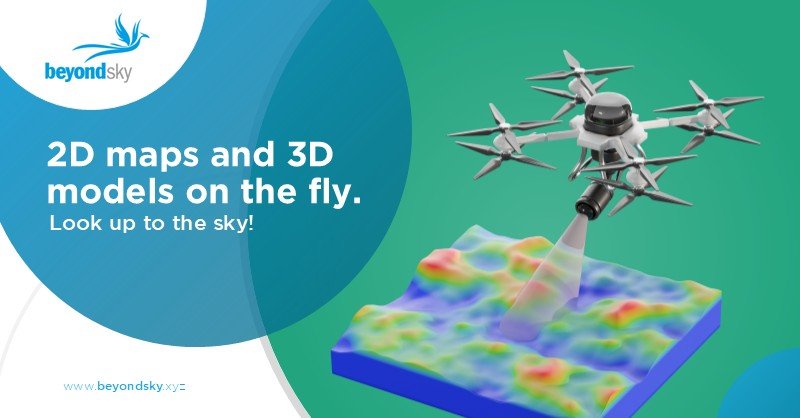
With UAVs (Unmanned Aerial Vehicles) fitted with cameras or LiDAR sensors, you can gather detailed 2D maps and 3D models in a few hours. Drones fly above the site, collect accurate spatial data, and return with a full picture. It costs less and removes much of the manual work.
Drone mapping turns aerial data into visual and measurable results. Two main methods make this possible: photogrammetry and LiDAR.
Photogrammetry collects many overlapping images and uses software to rebuild the surface. It forms high-resolution maps and 3D models by comparing how objects shift between pictures.
LiDAR (Light Detection and Ranging) sends laser pulses from the drone to the ground and measures how long it takes to return. Millions of data points form a precise terrain map, even under trees or uneven light.
Both methods have strengths. Photogrammetry gives rich visuals, while LiDAR provides exact detail. Together they deliver clear and dependable data for mapping any terrain.
Flying the drone is the only step. Processing the data is where mapping happens.
Good software converts raw photos or LiDAR scans into useful models and maps. Popular options include:
Select based on your hardware, accuracy needs, and budget. For complex jobs, pair strong hardware with dependable software for consistent output.
A drone mapping job follows a simple pattern.
This workflow applies to most mapping tasks across industries.
Drone mapping helps farmers track crop health and water use. Multispectral sensors show where plants need attention and help reduce waste.
Site managers use drone surveys to monitor work, measure materials, and verify progress. Aerial data helps prevent costly mistakes.
Researchers map forests, rivers, and coastlines to track erosion or habitat change. Drones collect the same data points at intervals to show change over time.
Drone mapping replaces manual pit surveys. It provides safe, quick measurements of stockpiles and extraction areas.
Utilities inspect power lines, roads, and bridges without closing sites or risking worker safety. High-resolution maps reveal wear or damage in structures.
Euradrones, available through BeyondSky, takes mapping further. It combines precision sensors with intelligent processing.
Key features include:
This system turns drone mapping into a complete data intelligence tool for industries that depend on trusted results.
These steps help ensure that every map you produce meets professional standards.
Drone mapping is evolving fast. Hardware is lighter and more precise, and software uses AI to process data in real time. Future UAVs will link directly to city systems, design software, and environmental models.
The next stage will merge mapping, analytics, and automation into one workflow. Surveys will move from being an extra step to being part of how we plan, build, and manage infrastructure.
Drone mapping has become a standard part of modern surveying. It saves time, reduces risk, and gives results that rival traditional tools. With the right equipment and workflow, anyone from farmers to engineers can access high-quality spatial data.