How to Boost Your Drone Battery Life: Expert Tips that Manufacturers, Suppliers & Buyers should know
Published by:Beyond Sky
 English
In the drone sector, battery performance is more than a footnote, it underlines the mission success in bold. If you manufacture or supply drones, your battery specifications and dependability can shape your reputation. Buyers judge ROI by how many productive hours they get before swapping or replacing a pack. Battery quality can give companies a measurable edge.
Drone batteries life is about compromise. You cannot maximize flight time and payload without considering chemistry, engineering, and field variables. The numbers printed on battery packaging rarely tell the full story. Professional evaluation means looking closer at both numbers and context.
For most current drones, the main choice is between lithium polymer (LiPo) and lithium-ion (Li-ion). LiPo batteries dominate FPV and racing models thanks to their lightweight and impressive discharge rates. They demand sharp attention to charging and storage.
Li-ion batteries stand out for longer cycle life and improved safety in long-term storage. They also handle regular top-ups better. Many larger commercial drones use Li-ion for these reasons.
Solid state batteries for drones are gaining attention, with the promise of nearly double the energy density. This technology holds major potential for endurance but is mostly in the R&D stage and not yet widely available.
Long-life batteries begin with careful engineering and qualified component selection. The quality of the cells themselves is foundational. Even advanced battery management systems (BMS) can only do so much if the core chemistry is inconsistent.
Ballpark specifications are insufficient. Quality suppliers share cell provenance and provide details on BMS features. Industrial buyers should look for robust overcharge protections, customizable cut-offs, and thermal safeguards. These provide better safety outcomes and help limit field incidents.
Manufacturers must balance energy density and weight. The best drone lithium polymer batteries can reach energy densities above 200Wh/kg without excess mass. Using low-quality materials or overbuilding for protection can cost valuable flight time.
Excess heat degrades batteries quickly. Batteries must be tested for vibration, high and low temperature, and connector durability.
Industrial-grade suppliers use thermal and shock testing to prevent swelling or degradation. If a battery routinely overheats or swells, it either needs to be engineered differently or used within less aggressive profiles.
A reliable battery supplier or manufacturer should deliver:
Compatibility is king. Selecting the largest mAh battery is pointless if it does not fit your drone’s voltage, amperage, or form factor. DJI drone battery models are precisely matched to their systems. Buyers who experiment with third-party batteries must pay close attention to technical matching and warranty considerations.
Cost savings can be deceptive. Low-cost FPV drone battery options may appear attractive at first but will often degrade rapidly, reducing overall fleet value.
Major shifts are coming up for drone battery tech:
Looking for reliable LiPo, Li-ion, or smart battery solutions for your drone manufacturing, integration, or commercial operations?
Browse verified battery suppliers, compare specifications, and connect directly with global manufacturers on BeyondSky the world’s first B2B marketplace for professional drone technology.
BEI. Ultra Light battery for drones
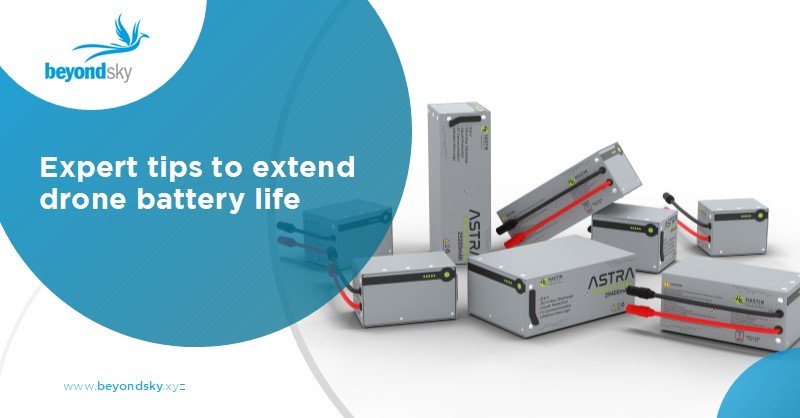
At Hastin Energy, primary focus lies in the design, development, and manufacturing of cutting-edge battery systems within the lithium-based battery industry. We specifically target sectors such as Drones/UAVs, Robotics, E-Commercial Vehicles, Construction Machinery, and the Energy Storage Systems.
Astra Smart Battery 16800mAh 6S:
Astra Smart Battery 21000mAh 6S:
Astra Smart Battery 29400mAh 6S:
These solutions are built for operators seeking durability and ongoing performance.
Focusing first on battery quality and appropriate selection will make a visible difference to drone uptime, safety, and overall business outcomes. In this field, thoughtful investment in energy tech will pay off every time a drone lifts off and stays productive.