Understand Drone Security, Adopt Your Best Defense
Published by:Beyond Sky
 English
Drones have evolved into versatile, multi-functional assets performing infrastructure inspections, delivering medical supplies, surveying farmland, supporting emergency teams and much more. All these activities depend on reliable drone software. The software controls how drones fly, how they send and receive information, and how operators get their data.
With more advanced capabilities come more risks. A cyberattack on drones can disrupt operations or expose sensitive information. Which is why a strong drone security system matters. A full Drone Security Solution includes secure coding, encrypted data links, trained operators, and regular checks. This article explores common threats, ways to protect drones, and proven practices to prevent hacking.
Here are some very common risks that drones may face due to cyberattacks
These are a few actions that you could take to strengthen drone defenses
It is a well-known fact that prevention is better than cure; therefore, here are some preventive actions you could take way before an attack occurs.
The following professional drone platforms integrate advanced cybersecurity safeguards to protect data and communication integrity:
Features a secure element chip for cryptographic functions, unique drone identity, and authenticated 4G pairing. Control and video links run over protocols like TLS and SRTP, while user-configurable keys let operators validate trusted missions. It is suited for enterprises or government entities requiring secure remote connectivity.
Equipped with AES-256-XTS encryption, secure codes set by users, and offline firmware updates to prevent compromise. Security is reinforced with FIPS-certified crypto engines, secure boot technology, and privacy management tools. These features support commercial and governmental operators that demand robust data protection.
Implements a zero-trust security architecture, requiring continuous verification of devices and users. Drone-ground communication relies on mutual authentication, reducing risks from spoofing, jamming, or unauthorized data access. This makes it highly suitable for mission-critical defense scenarios.
Incorporates strong encryption and hardened data links against hacking or interference. Deployed in U.S. defense and intelligence communities, these drones meet operational standards for secure surveillance and reconnaissance missions.
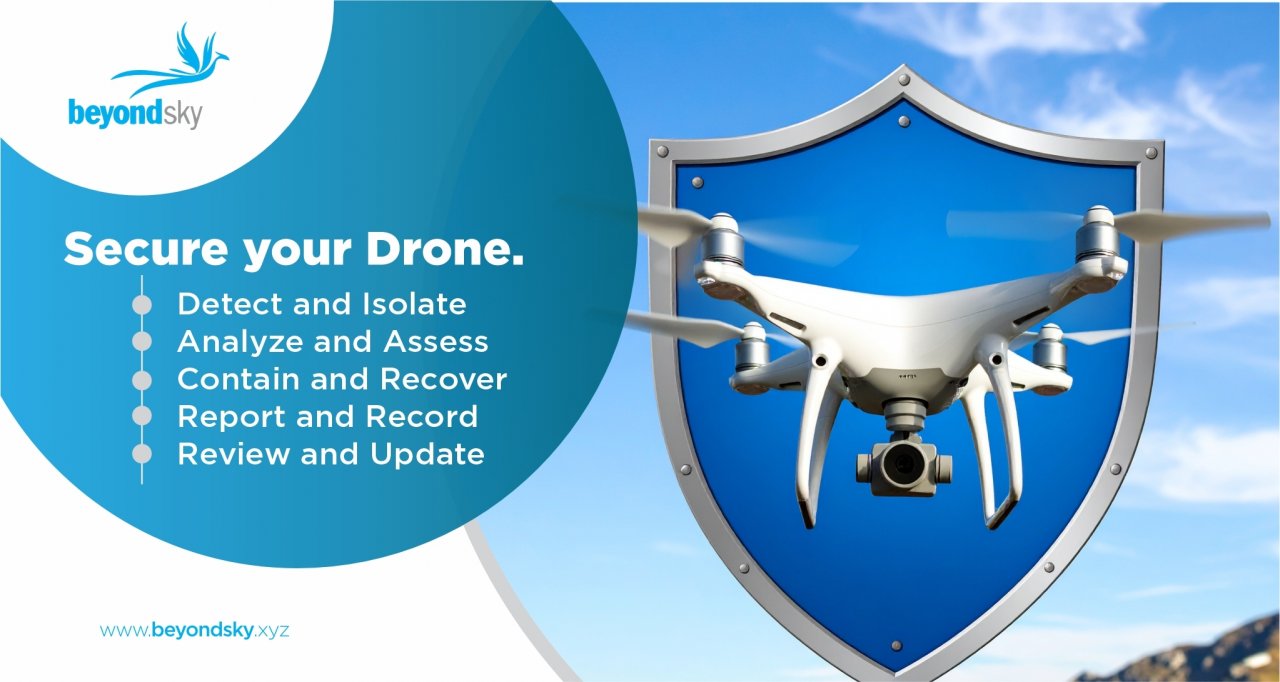
Here’s a quick action plan that you should turn to in case your Drone might be hacked:
Drone certifications are important because they help make sure drones and their software are safe, secure, and follow the right rules in each region. They give confidence to operators, businesses, and regulators that drones can be trusted in the air.
Below is a simple explanation of the major certifications in the world, the USA, Europe, and India, along with why they matter.
|
Certification Name |
Region |
What It Does |
Why It Is Relevant |
Link |
|
ISO/IEC 27001 & ISO/IEC 27701 |
Worldwide |
Sets standards for information security and privacy management systems. |
Ensures drone operators and manufacturers protect sensitive data and prevent breaches. |
|
|
DEKRA Cybersecurity Certification |
Worldwide |
Tests drones for resilience against cyberattacks across hardware, software, and communication. |
Confirms drones meet international benchmarks for cyber safety. |
|
|
Common Criteria (CC) |
Worldwide |
Evaluates IT products, including drone software, for encryption, authentication, and integrity. |
Vital for drones in government and critical infrastructure. |
|
|
FAA Remote ID & Operational Compliance |
USA |
Requires drones to broadcast ID and location. |
Improves safety, airspace transparency, and law enforcement monitoring. |
|
|
FIPS 140-2 / 140-3 |
USA |
Validates cryptographic modules and encryption algorithms. |
Secures drone communications and data integrity. |
|
|
EASA Operational Certification & EU Remote ID |
Europe |
Sets operational, safety, and cybersecurity requirements, plus Remote ID. |
Ensures drones meet EU safety and privacy laws. |
|
|
CE Marking |
Europe |
Proves drones comply with EU regulations on safety, EMC, and environment. |
Required to sell or operate drones legally in the EU. |
|
|
GDPR Compliance |
Europe |
Governs how personal data collected by drones is managed. |
Protects privacy for individuals during drone use. |
|
|
DGCA Type Certification |
India |
Certifies drone airworthiness, software security, and operational safety. |
Legitimizes drone use in Indian airspace. |
|
|
QCI Compliance |
India |
Sets standards for production, pilot training, and cybersecurity. |
Ensures drone reliability and safety for enterprise and government. |
|
Drones unlock new opportunities in work and daily life, but they are also vulnerable to attacks, hijacking, and operators can face risks if security is ignored. A hacked drone can put data, safety, and trust at risk. Strong drone security solutions are not just about protecting hardware; they safeguard people and missions too. The future of drones will belong to those who treat security as a core part of every flight, ensuring the skies stay open and safe for progress.
The biggest threats include GPS spoofing, signal jamming, command and control hijacking, firmware tampering, data interception, and cloud breaches. Each of these can redirect, crash, or compromise a drone.
Best practices include encrypting drone communications, enabling strong authentication, securing firmware updates with digital signatures, using anti-spoofing GNSS systems, and isolating drone networks. Regular audits and operator training also help prevent attacks.
Yes. Platforms like Parrot ANAFI Ai, DJI Enterprise drones, Blue UAS, and SpiderOak-enabled systems include strong features like secure chips, AES-256 encryption, protected updates, and zero-trust frameworks. These safeguards strengthen defense against cyberattacks.
Immediately cut off communication, switch to fallback or manual control modes, and if needed, power down the system. Follow an incident response plan to isolate, assess, and recover both drone and data.
Cyber protection isn’t enough if drones, controllers, or batteries are physically accessible. Attackers can tamper with firmware, install malware, or steal encryption keys. Keeping equipment in locked, monitored spaces adds an essential defense layer.
Using a zero-trust model, storing encryption keys in hardware security modules, running red team penetration tests, and monitoring flights in real-time all help deter hackers. Prevention ensures fewer risks and stronger mission resilience.