Drone Cleaning and Pest Control Solutions
Published by:Beyond Sky

 English
There was a time when cleaning skyscrapers or spraying crops meant long hours, risky climbs, and a whole lot of manual work. Today, drones are doing most of it faster, safer, and more accurately.
Drone cleaning solutions and pest control drones are changing how industries maintain infrastructure and protect crops.
Instead of scaffolding, ladders, and tractors, we now have cleaning drones and drone spraying systems flying and fulfilling missions that used to involve large teams, and logistical challenges.
Think of cleaning drones as precision washers in the sky. They use pressurized nozzles, smart sensors, and high-speed pumps to clean building façades, solar panels, and even industrial structures coated with grime. These industrial cleaning drones handle the hard-to-reach stuff, saving time and cutting out the need for scaffolding or rope work.
A building façade cleaning drone can finish the same job in half the time it takes a manual crew and with about 80% less water. They’re equipped with cameras and sensors that adjust spraying angles on the fly. Some even detect wind speed to keep spray patterns accurate.
Disinfection drones became game-changers during global health crises. They spray sterilizing solutions evenly over large public areas like stadiums and transit hubs, keeping operators far away from any exposure.
What makes these drones so efficient is their simplicity: lightweight carbon fiber frames, smart flight controllers, and pumps that can maintain perfect pressure. They’re like flying pressure washers with brains.
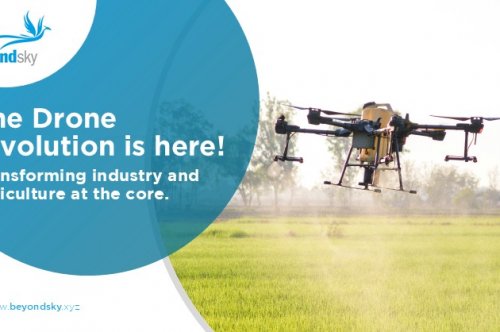
In agriculture, pest control drones have become the farmer’s most reliable fieldhand. Instead of driving heavy tractors through rows of crops, drones use onboard sensors and AI-assisted mapping to spray only where it’s needed.
Pesticide spraying drones equipped with drone spraying systems detect pest-affected zones and apply chemicals with pinpoint accuracy. This reduces overspray, conserves pesticides, and protects the environment. Operators stay on the ground while the UAV handles the chemicals overhead.
It’s not just about automation, it’s about control. The drone adjusts its flow rate and altitude depending on vegetation density or wind speed. Compared to traditional sprayers, drones avoid soil compaction and improve crop yields while cutting chemical waste.
You could say these drones work with the precision of a surgeon and the endurance of a machine.
Underneath the streamlined shell, these drones are packed with smart engineering. A few core elements make them so effective:
A drone is a compact and complex system that does a complicated job. What used to take multiple machines is now handled by a single drone.
Among the manufacturers building high-grade spraying and cleaning UAVs, Objectif Drone stands out on BeyondSky. They’re one of the first European drone makers offering S3/C5/C6 certified platforms ready for industrial deployment.
Their lineup is designed for professionals who need reliability, safety, and efficiency — without overcomplicating operations.
Here’s what makes Objectif Drone impressive:
Their carbon-frame quadcopters can get close to antennas, power lines, and rooftops, places where traditional cleaning tools simply can’t go.
Some of their best-selling models include:
Each of these drones reflects how Objectif Drone combines performance and practicality. You can find them all on BeyondSky, the go-to marketplace for advanced UAV solutions.
The adoption of drone cleaning services and drone pest control systems has skyrocketed in the past few years, and for good reason.
Even better, drones generate operational data like footage, maps, spray logs that help businesses refine how and when they perform maintenance or pest control.
Challenges Still in Play
Of course, it’s not all smooth flying. Widespread drone use in cleaning and spraying still faces some friction.
But as hardware prices fall and regulations adapt, these barriers are shrinking fast. The benefits far outweigh the learning curve.
What’s next is even more exciting. The next wave of drone cleaning equipment will feature AI-driven automation and real-time analytics. Imagine fleets of drones that coordinate with each other to clean skyscrapers or treat entire farmlands simultaneously no human input after setup.
Swarm systems are already being tested for agriculture, allowing multiple drones to divide and conquer fields in minutes. Machine vision and thermal cameras will soon help drones detect pest infestations before they spread. On the cleaning side, auto-docking systems could let drones refill and recharge on their own.
It’s not science fiction anymore. It’s just the next stage of industrial evolution, one that’s faster, cleaner, and far safer.
Drone cleaning solutions use UAVs equipped with pressurized tanks, nozzles, and intelligent flight systems to clean buildings, solar panels, and industrial sites. They’re perfect for areas that are hard to reach or unsafe for human workers, such as high-rise facades, rooftops, and wind turbines.
Pest control drones apply pesticides or disinfectants through precision spraying systems. Using onboard sensors and mapping software, these drones target infected areas while adjusting spray volume and flight altitude automatically to ensure efficiency and minimize waste.
Yes. Cleaning drones use controlled pressure and purified water or eco-friendly solutions that won’t damage surfaces. For pest control, targeted spraying reduces pesticide exposure and lowers environmental impact compared to conventional ground methods.
Drone cleaning services cut cleaning time by half, minimize water consumption by up to 80%, and eliminate risks involving scaffolds or ladders. They operate in tight or dangerous spaces without disrupting on-site operations.
Industrial cleaning drones, disinfection drones, and building façade cleaning drones handle exterior maintenance. For agriculture, pesticide spraying drones and pest control drones equipped with aerial spraying systems deliver exact coverage on fields and orchards.
Yes. Objectif Drone, a European manufacturer listed on BeyondSky marketplace, produces S3/C5/C6 certified drones designed for professional cleaning and pest control use. Their CHRONOS C5 and CHRONOS MINI platforms are known for precision, safety, and ecological operation.