We have battery-powered drones that can fly for a few hours in a single run. But that’s the limit for battery-powered drones - just hours. What if you could fly a drone for an entire day at once? This is possible with Tethered Drones. But why would a drone need to stay in the air for extended periods, and how does it achieve this? We shall try to answer these questions as we move forward in this blog.
What is a Tethered Drone?
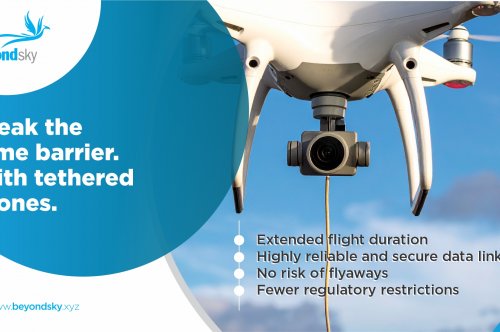
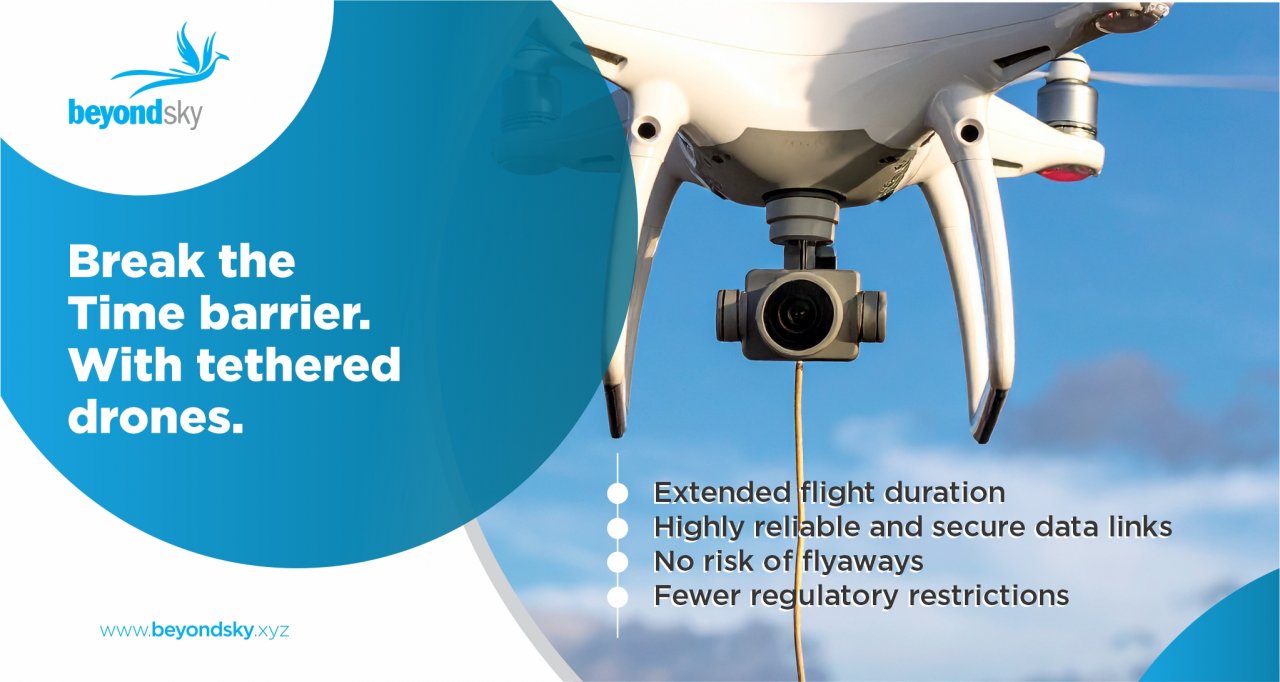
A tethered drone is a type of unmanned aerial vehicle (UAV) connected to a ground station by a physical cable or tether. The cable supplies electricity for flight and links data transmission directly to operators on the ground. Unlike free-flying drones, tethered drones benefit from the secure, uninterrupted power and data pathways provided by their tether.
Tethered drones can maintain a fixed position or controlled movement at variable heights—sometimes up to 200 meters or higher—without depleting batteries or requiring frequent landings. Their design makes them perfect for persistent drone surveillance and continuous monitoring tasks.
Key Characteristics:
- Physical connection (tether) between drone and ground
- Continuous power supply from a base unit
- Reliable, high-speed data transmission through the cable
- Stable positioning and limited spatial area
- Automated flight capabilities and simple operator control
How Tethered Drone Systems Work
In this section, we’ll explore the key components of a tethered drone and see how each part works together to keep it flying.
1. Ground Power Station
The mission begins on the ground. The power station provides a steady flow of electricity through the tether.
- It usually combines a generator, battery backup, and control electronics.
- The output is high-voltage power (often 300–500V) that travels through the cable and is converted on the drone into usable energy.
- Stations are often mounted on trucks, ships, or fixed posts, depending on the mission.
- Operators can also monitor cable tension, flight height, and power use directly from the station’s control panel.
This setup ensures the drone never has to land for recharging, which is the biggest limitation of normal UAVs.
2. The Tether Cable
The cable is the backbone of tethered drone technology. While it looks thin, it’s packed with engineering.
- Made of Kevlar or carbon-fiber composites, it is both light and extremely strong.
- Inside, it carries electrical power lines and fiber optic strands for data.
- It can handle tension from wind and altitude while keeping the drone stable.
- The cable runs through an automatic winch system, which releases or retracts it smoothly as the drone moves.
A well-designed tether can be just a few millimeters thick yet deliver kilowatts of power and gigabit-speed data.
3. The Drone Platform
Unlike a normal UAV that relies on batteries, a tethered drone runs directly on the ground power supply.
- Motors,Drone Propeller, and onboard systems all draw energy from the tether.
- Payloads can include cameras, thermal sensors, LiDAR, or communication relays. Some systems support payloads up to 10–20kg, which is more than most standard drones can handle.
- Many tethered UAVs have a hybrid mode. If the tether disconnects, the drone automatically switches to its onboard battery and lands safely.
- Cooling systems are also built in, since flying for hours creates heat that must be managed.
This design makes tethered UAVs reliable for missions that require constant presence in the sky.
4. Data Transmission
The tether is not just for power but it also carries critical data.
- Fiber optic cables inside the tether send video and sensor data back to the operator with almost no delay (as low as 2–5ms).
- The physical connection makes the system resistant to hacking and jamming, unlike drones that rely on wireless links.
- Some advanced systems add a wireless backup channel, just in case the tether’s fiber line is damaged.
This means operators get real-time video, mapping, and telemetry, which is crucial for defense, surveillance, and disaster response.
5. Safety Mechanisms
A tethered UAV must stay safe even in tough conditions. That’s why most systems include several protective features.
- Automatic retraction systems pull in the cable if winds get too strong.
- Each drone carries a small backup battery for emergency landings.
- Geo-fencing and GPS controls prevent the drone from drifting beyond its safe area.
- Most platforms are tested to withstand winds of 25–35 knots and temperatures from –20°C to +50°C.
These safety measures make them dependable even in extreme weather or emergencies.
6. The Workflow
Here’s how a typical mission unfolds:
- The ground station powers on and sends energy through the tether.
- The drone lifts off, receiving both power and data connection.
- The winch system adjusts the tether length as the UAV climbs.
- Cameras and sensors feed live data back to operators on the ground.
- If the tether disconnects or power fails, the UAV uses its onboard battery to land safely.
This cycle allows tethered drones to serve as persistent eyes in the sky, something battery-powered UAVs cannot match.
Applications of Tethered Drones
Tethered drone technology excels in any scenario demanding persistent, safe aerial coverage or real-time communication. Here are the leading use cases for tethered drones across industries:
Persistent Surveillance and Public Safety
- Event Security:Tethered UAVs provide crowd monitoring during sports, concerts, and festivals, supporting real-time response and threat detection.
- Border Control:Secure, stationary aerial platforms can operate for days, monitoring borders or critical infrastructure to deter and detect unauthorized activity.
- Police Response:Law enforcement deploys tethered drones for rapid incident assessment, traffic management, and crowd control during high-risk situations.
Disaster Response and Emergency Operations
- Disaster Relief:Continuous flight enables drones to track fire progression, assess storm damage, and coordinate search-and-rescue missions without recharging breaks.
- Environmental Monitoring:Drones with thermal or chemical sensors track wildfires, measure pollution, and collect data for post-disaster analysis.
Industrial Inspection and Asset Management
- Utilities Monitoring:Powerline, pipeline, and wind turbine inspections benefit from high-altitude platforms that operate as long as necessary, capturing fine details for maintenance and safety.
- Construction Oversight:Builders and engineers use tethered drones to surveil large worksites from above, safeguarding investments and speeding up troubleshooting and reporting.
Communication and Broadcasting
- Temporary Networks:Tethered drones lend mobile communication platforms for events and emergencies, supporting Wi-Fi or cellular relay where infrastructure is damaged or absent.
- Live Broadcasting:Major media outlets rely on the stable, uninterrupted video feeds provided by tethered drones for continuous coverage at events and in remote areas.
Military and Defense
- Reconnaissance:Tethered UAS platforms equip tactical teams with persistent surveillance, decision-support data, and secured communications in conflict zones.
- Force Protection:These drones maintain overwatch at strategic checkpoints or bases, delivering deterrence and situational awareness over long periods.
Agriculture and Environmental Science
- Crop and Soil Analysis:With specialized sensors, tethered drones monitor field conditions, moisture levels, and crop health across extended periods, helping farmers make data-driven decisions.
- Wildlife Conservation:Teams use drones to monitor animal migrations or detect poaching activities, with minimal disturbance to ecosystems.
Advantages of Tethered Drone Technology
Tethered drone systems present a unique set of features that distinguish them from traditional untethered platforms.
Extended Flight Duration
- Most tethered UAVs can remain airborne for many hours—some advanced models operate for 24 hours or longer—accomplishing missions impossible for battery-operated drones.
- This endurance is vital for persistent drone surveillance or high-priority tasks that cannot risk downtime.
Secure Data Transmission
- Tether cables ensure a stable, interference-free link, crucial for sensitive operations like disaster response or government missions.
- With fewer risks of jamming or hacking, communication is more reliable than wireless-only platforms.
Operational Safety
- Because tethered UAVs are limited in range and locked to specific airspace, there is a substantial reduction in crash risk, flyaway, or unauthorized entry into restricted zones.
- These systems often face fewer regulatory hurdles since they occupy a well-defined flight area and offer enhanced safety for operators and bystanders.
Deployment Flexibility
- Automated launching and retrieval systems, as well as modular sensor payloads, make tethered drone setups easy to adapt for various missions and conditions.
- Many systems offer plug-and-play compatibility for different sensors and cameras to suit unique requirements.
Eco-Friendliness
- Direct, continuous power eliminates the need for excessive battery swaps, reducing electronic waste and streamlining maintenance routines.
Deterrent Function
- The visible presence and persistence of tethered UAS platforms can act as a powerful deterrent, promoting safety at public gatherings or in sensitive infrastructure zones.
Tethered Drone by Vololand: Available on Beyondsky
If you are looking for a reliable Tethered Drone then the VL 1300 Mars by Vololand is now available on Beyond sky. Built for endurance and reliability, it is designed for missions that demand continuous power and real-time data transmission.
Key Highlights
- Size & Payload: 1300mm diagonal, compact frame, with up to 10kg payload capacity.
- Continuous Power: ACW-150 tethering system delivers 12KW stable output with a 150m automatic cable winch.
- Durability: Operates from -20°C to 40°C, built for extreme conditions.
Core Applications
- Surveillance: Long-duration monitoring for borders, events, or sensitive sites
- Communication Relay: Ensures connectivity in disaster zones or remote regions
- Emergency Response: Real-time aerial views for rescue, firefighting, and relief
- Industrial Monitoring: Continuous inspection of infrastructure and construction sites
With the VL 1300 Mars now available on Beyondsky, organizations gain a dependable solution for persistent surveillance and mission-critical operations.
FAQs
1. What is a tethered drone and how does it differ from regular battery-powered drones?
A tethered drone is connected to a ground station via a physical cable that supplies continuous power and enables high-speed data transmission. Unlike regular drones limited by battery life, tethered drones can fly for many hours or even days without needing to land for recharging.
2. How does the tether cable function in these systems?
The tether is made from lightweight, strong materials like Kevlar and carries both electrical power (high-voltage) and fiber optic data lines. It is managed by an automatic winch for smooth extension and retraction, allowing the drone stable flight at varying altitudes up to around 200 meters or more.
3. What are the primary applications of tethered drones?
Tethered drones are ideal for persistent aerial surveillance, event security, disaster response, industrial inspections, communication relay, military reconnaissance, and environmental monitoring. Their ability to stay airborne long-term and provide secure, real-time data makes them valuable in high-demand operations.
4. What safety features do tethered drone systems include?
Safety mechanisms include automatic tether retraction during strong winds, backup batteries for emergency landings, geo-fencing to restrict flight zones, and robust design tested to operate in harsh weather conditions ranging from –20°C to +50°C.
5. What advantages do tethered drones offer over wireless drones?
They provide extended flight duration without battery swaps, highly reliable and secure data links resistant to hacking or jamming, reduced risk of flyaways or unauthorized flights due to tether limits, and fewer regulatory restrictions because of their controlled airspace usage.


 English