FPV Goggles for Drones: Unlocking Immersive First-Person Flight
Published by:Beyond Sky
 English
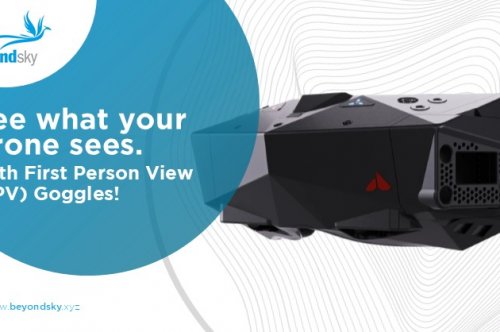
There’s something special about flying a drone and seeing exactly what it sees. That instant, first-person perspective, that rush when the ground starts moving beneath you, it’s addictive. FPV goggles give you that feeling. They don’t just show you what’s in front of the drone; they make you feel like you’re inside it.
This isn’t just another gadget. It’s a full sensory shift. Let’s break it down, what FPV goggles actually do, how they work, and why they’ve become a must-have for everyone from drone racers to professional cinematographers.
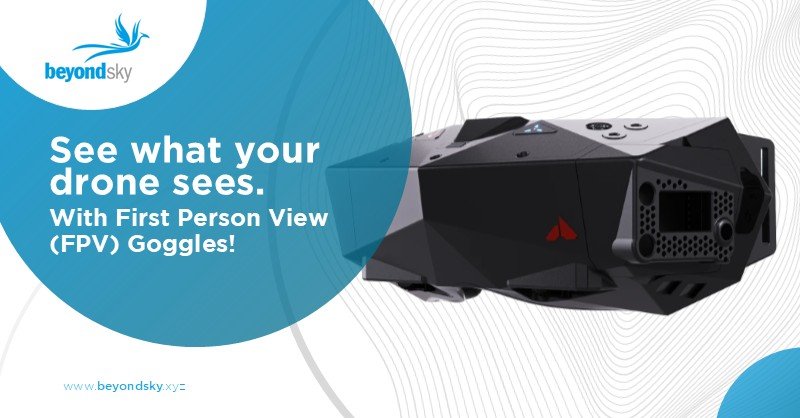
FPV goggles are basically your window into the drone’s world. They’re headsets with two tiny screens that show a live feed straight from your drone’s camera. Instead of glancing down at a controller display, you’re fully immersed in what the drone sees, in real time.
The setup is fairly simple, though each piece matters:
The magic happens in the low-latency link between those parts. When tuned right, it feels almost instant. You tilt the drone, and the world tilts with it. Once you fly FPV, going back to line-of-sight feels… detached.
The obvious benefit is immersion; you’re not watching a drone, you’re in it. But FPV goggles also make you a better pilot. Here’s how:
It’s a full sensory experience that changes how you approach flight entirely.
All FPV goggles serve the same purpose, but how they deliver that experience varies a lot. Broadly, you’ll find three main types: analog, digital, and hybrid.
Analog systems have been around the longest, and they’re still the go-to for drone racing. They use radio signals to transmit live video with almost zero delay. The image isn’t sharp, but the connection is fast and reliable.
Digital goggles, like the DJI FPV Goggles 2, changed everything. They compress and transmit HD video digitally, giving you sharp, vibrant visuals and strong connections even in complex environments.
Then there are box-style goggles, the ones that mix features or use a single big LCD display instead of two small ones. They’re simple, flexible, and usually support both analog and digital signals.
Each type has its audience. Racers chase latency, filmmakers chase visuals, and hobbyists look for a good middle ground.
Specs on a page don’t always tell the real story. You only really understand goggles once you’ve flown with them, but here are the main specs that make or break the experience:
Good FPV goggles should feel like part of you, not something you’re wearing.
The FPV market is growing fast, and every year brings new refinements. Here are some of the most talked-about goggles in 2025:
Still the standard for digital FPV. Sharp 1080p feed, low latency, excellent range , a favorite for pros who need dependable visuals.
A strong choice for pilots who want flexibility. Works with HDZero digital systems, combining clarity with a compact design.
A top-tier analog headset known for its vivid OLED screens and rock-solid signal handling. Many racers still swear by it.
Orqa’s flagship headset built for pilots who take FPV seriously. The FPV.One Pilot combines dual OLED displays with a 37° FOV and crystal-sharp visuals. The cooling system keeps lenses clear, while focus adjustment and GoPro integration make it versatile. It supports both analog and digital feeds, includes a DVR, and has expansion ports for future upgrades.
You can find the Orqa FPV.One Pilot and other professional FPV gear on BeyondSky, a marketplace that curates reliable, high-quality drone equipment.
FPV goggles aren’t just for hobbyists anymore. They’ve become essential across multiple fields:
Flying FPV has its rules. Since you can’t see your drone directly, most countries require a spotter, someone keeping visual contact while you fly.
Keep these basics in mind:
Safety is part of the craft. When things go wrong, being aware and in control makes all the difference.
FPV goggles have completely changed how people experience drone flight. From grainy analog feeds to today’s HD digital goggles, they’ve gone from a niche accessory to a central piece of the drone world.
It’s not just about flying drones anymore. It’s about being up there even when your feet are still on the ground.
FPV (First Person View) goggles are wearable headsets with built-in screens, receiving a real-time video feed from your drone’s onboard camera via radio transmitter and receiver. They let you see what your drone sees, creating an immersive flight experience.
There are analog, digital, and hybrid (box) goggles. Analog offers ultra-low latency, digital delivers HD clarity, and hybrids blend both with more flexibility and bigger screens. Each type suits a different flying style or budget.
Digital FPV goggles provide sharper, high-resolution video and are less susceptible to interference. They are ideal for cinematography, professional work, and pilots seeking the best image quality, while analog remains popular for drone racing due to near-zero delay.
Important specs include resolution (HD or better for clarity), field of view (30–50 degrees for immersion), low latency (for racing or tight maneuvers), IPD (interpupillary distance) adjustment, DVR recording, and comfortable padding for long sessions.
FPV goggles are used in drone racing, aerial cinematography, search and rescue, inspection, security, and immersive freestyle flying, offering real-time pilot perspective and improved precision.
Many countries require a visual observer (“spotter”) for FPV flights to maintain line-of-sight with the drone. Always check local drone regulations, avoid flying near airports, and use approved radio frequencies.
Popular models include DJI FPV Goggles 2 for digital, Fat Shark Dominator HD and Skyzone SKY04X for analog, and Orqa FPV.One Pilot (available on BeyondSky) for a premium, dual-mode experience compatible with both analog and digital feeds.