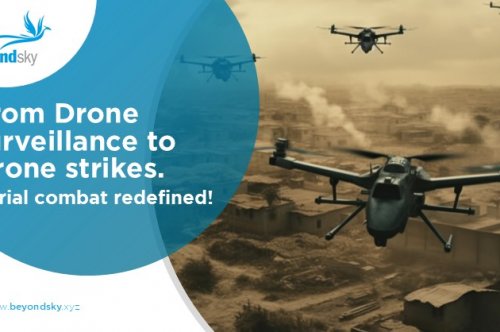
Drones have redefined the very idea of a battlefield today. When it comes to aerial combat, Pilots aren’t always in the cockpit anymore. Some are thousands of kilometers away, controlling aircraft that watch, listen, and strike with terrifying precision.
What started off as small, camera-mounted tools for scouting missions has evolved into one of the most critical components of global defense operations. Drone pilots with drones don’t just observe, they act, jam, supply, and strike, doing it with a consistency that human pilots can’t always match.
Drone Technology in Defense
Military drone technology has stretched across the entire spectrum, from tiny quadcopters you can launch from your palm to massive jet-powered vehicles carrying smart munitions. Each one integrates layers of software intelligence, AI-driven control, superior imaging, and secure communication links.
Here’s what gives today’s UAVs their edge:
Autonomous Navigation
Using AI-powered GPS and inertial guidance, drones can take off, navigate complex terrains, adjust paths on the fly, and return home even if communications are jammed.
ISR Systems (Intelligence, Surveillance, Reconnaissance)
Multi-sensor setups combine optical, radar, and infrared feeds to process intelligence instantly. Some systems now auto-tag potential threats using AI object recognition.
Stealth Capabilities
New materials and exhaust-dampening systems make some UAVs virtually invisible both to radar and heat sensors.
Loitering Munitions
So-called kamikaze drones like Israel’s Harop loiter above a zone until a target is confirmed, then dive into the strike autonomously.
Counter-Drone Weapons
The same technology is turned defensive, creating systems that detect and neutralize hostile UAVs using jamming or directed energy weapons.
These drones aren’t working in isolation anymore. They’re interconnected, part of defense networks where they share data with satellites, command centers, and ground squads in real time.
Types of Military Drones
Defense UAVs fall into very distinct types based on mission range and functionality.
- Micro & Mini UAVs: Portable and tactical systems like the Black Hornet or India’s AI-powered MBC2 drones. Perfect for urban warfare and reconnaissance in confined battle zones.
- Tactical UAVs: Models such as the RQ-7 Shadow and the Israeli Heron link command centers to field troops, providing ISR and communication relays.
- MALE (Medium Altitude Long Endurance) UAVs: Drones like Turkey’s Bayraktar TB2 or India’s TAPAS BH-201 patrol for a full day, switching seamlessly from surveillance to strike missions.
- HALE (High Altitude Long Endurance) UAVs: Examples include the MQ-9 Reaper and China’s Wing Loong II, built for wide-range strategic observation and precision-attack operations at 40,000 feet.
- UCAVs: Machines like India’s Ghatak and Russia’s Okhotnik-B are purely combat focused, fast, autonomous, lethal.
- Swarm or Loitering Drones: Coordinated packs of small UAVs using AI to confuse radar, jam systems, or execute synchronized strikes.
In active combat, armies usually combine all of these, with mini UAVs gathering local intelligence, tactical drones bridging communication, and jet-powered systems ready to engage from afar.
Applications of Drones in Defense
There’s no single role for drones anymore; they fulfill dozens simultaneously.
- Surveillance and Reconnaissance: They’re unmatched for persistent intelligence gathering over difficult terrain. Long-endurance drones support real-time command decisions, scanning from deserts to coastlines seamlessly.
- Precision Strikes: Combat drones can confirm, track, and destroy targets with unrivaled accuracy, often reducing collateral damage.
- Electronic Warfare: UAVs loaded with jammers and electronic pods disrupt enemy radar and interfere with networks during battles.
- Aerial Logistics: Autonomous transport drones are now moving supplies, ammunition, and emergency gear directly into frontline camps.
- Search and Rescue: Equipped with thermal imaging, drones locate survivors or downed personnel where helicopters can’t operate safely.
If a modern operation is underway, there’s almost always a UAV overhead, collecting, relaying, and acting on real-time intelligence.
Benefits of Military Drone Usage
Military adoption of drones isn’t hype. The payoff is huge.
- Reduced Risk: Eliminating pilot presence in hostile zones significantly lowers human casualties.
- Extended Endurance: A drone like the MQ-9 can remain airborne up to 27 hours, ensuring uninterrupted monitoring or engagement during multi-phase missions.
- Unmatched Precision: AI help ensures every missile, bomb, or reconnaissance pass serves its purpose with minimal error.
- Cost and Resource Efficiency: UAVs can be operated and maintained at a fraction of what fighter jets cost, and with far fewer training hours.
- All-Weather Sustainability: Advanced sensors and radar systems make them reliable during night missions, storms, or sand-laden deserts. They’ve reached that rare status in military tech: consistent, efficient, and indispensable.
Challenges and Risks
Defense drones come with their own challenges.
- Cybersecurity Holes: Interference, data theft, and GPS spoofing are real threats. It’s an area of constant arms race between hackers and defense engineers.
- Ethical Debates: It’s one thing when a drone is guided by a human. It’s another when an AI-triggered decision ends a life. Accountability remains legally murky.
- Airspace Management: More drones mean denser skies, forcing tighter coordination between UAV and manned fleets.
- Satellite Dependency: Most long-range drones rely entirely on satellite communication. Disrupting this link can paralyze operations instantly.
- Rapid Countertech Evolution: Every new drone breed prompts a countermeasure, including laser interceptors, anti-swarm defenses, and EMP-based neutralizers.
Militaries know continued superiority means constant reinvention. Staying still is not an option.
Global Adoption and Strategic Impact
Globally, drones now shape policy as much as strategy.
- United States: Maintains global dominance with platforms like the MQ-9 Reaper and next-gen XQ-58A Valkyrie. These carry out precision strikes and reconnaissance while doubling as force multipliers in disaster and surveillance missions.
- China: Building massive production pipelines for Wing Loong II and CH-series drones that it exports widely across Asia and Africa.
- India: Combining imported systems such as the MQ-9B with indigenous programs like HAL CATS and Solar Defence Rudrastra for domestic use. India’s defense drones already patrol its high-altitude borders and oceans.
- Turkey: Bayraktar TB2 has rewritten regional warfare strategy, showing how small nations can dominate conflicts with affordable, effective UAVs.
- Europe: The Eurodrone initiative is aligning France, Germany, and Italy under a new phase of centralized NATO surveillance and strike capabilities.
For many countries, UAVs are not just tactical weapons but bargaining chips in diplomacy and deterrence.
The Future of Military Drones
Expect the future of UAVs to blend autonomy with collaboration. Drones will partner with manned aircraft, using AI to think, communicate, and strike as a synchronized force.
- True AI Autonomy: Next-gen drones learning to plan, identify, and react to threats in milliseconds.
- Swarm Logic: AI collectivism, fleets of drones moving as one network, capable of massive attack or coordinated defense.
- Directed Energy Systems: Armed with lasers or EMPs, drones will neutralize enemy electronics or even other drones on sight.
- Modular Platforms: Swappable payload bays allowing role change between strike, recon, and signal operations.
- Quantum Encryption: Future UAVs will run quantum-secure links that hackers can’t breach.
The military role of drones is evolving from assistance tools to tactical partners. As a U.S. Army research note put it recently, “the next generation of operators will not just fly drones, they will train, task, and trust them.”
Drones have already changed how wars are fought, and now they’re reshaping who commands the skies. They extend reach, shrink timelines, and remove the fragility of human endurance. But they also make one thing clear: air dominance is no longer about who has the fastest jets, but who has the smartest machines. The next great power shifts will be written in code, algorithms, and UAV wings cutting silently through the sky.
FAQs
1. How are drones changing modern military strategy?
Drones give armed forces real-time intelligence, precision strike capabilities, and extended surveillance without risking pilots. They can operate in dangerous zones for long durations and support air, land, and naval missions efficiently.
2. What are the main types of military drones?
Military drones include micro and mini UAVs for scouting, tactical UAVs for battlefield coordination, MALE and HALE drones for long-endurance surveillance, UCAVs for combat, and swarm or loitering drones for coordinated attacks.
3. What are the key uses of military drones today?
Their primary roles are surveillance, precision strikes, electronic warfare, logistics supply, border security, and search-and-rescue in high-risk combat areas.
4. Which countries lead in defense drone technology?
The United States, China, Turkey, and India dominate the UAV sector, each investing in surveillance, strike, and autonomous combat systems such as the MQ-9 Reaper, Wing Loong II, Bayraktar TB2, and Ghatak UCAV.
5. What advantages do military drones have over manned aircraft?
Drones cost less to operate, can stay airborne for over 24 hours, perform missions in hazardous conditions, and deliver higher precision while reducing risk to human personnel.
6. What challenges come with drone use in defense?
Key challenges include cybersecurity risks, GPS dependency, ethical concerns around AI-driven attacks, and the constant need for counter-drone technologies.
7. What is the future of drones in global defense?
The future involves AI-driven autonomous drones, swarm operations, quantum-secure networks, and modular designs allowing faster deployment and mission adaptability across global defense forces.