Drone Frames for Long-Endurance Flights: A Complete Buyer’s Guide
Published by:Beyond Sky

 English
If you want your drone to fly longer, more efficiently, and without draining energy mid-air, the secret starts with the frame. It’s the body that defines how effortlessly a drone cuts through the air, how much it can carry, and how long it can stay airborne.
When we talk about drone frames for long endurance, we’re really talking about the science of weight, balance, and material efficiency. Let’s get into what defines endurance and how to pick the right frame for it.
Endurance isn’t just about strapping in a bigger battery. It’s about how the entire system, like frame, powertrain, and aerodynamics, works together to minimize energy loss.
Weight is the first enemy of endurance. Every gram you save on the frame gives you extra seconds, sometimes minutes, of flight. Aerodynamics come next: a sleek, drag-free shape helps the drone glide through air instead of fighting it. Lastly, thermal performance plays a role. A frame that disperses heat efficiently prevents energy waste and motor overload.
And this is where the frame steps in. The frame dictates every other design choice, your motor size, propeller diameter, and even flight pattern. It’s the structure that determines how efficiently your drone converts electrical energy into motion.
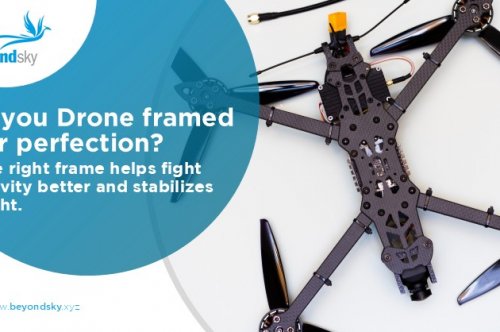
The drone frame does far more than hold parts together. It determines thrust efficiency, flight stability, vibration damping, and power distribution. Frames designed for endurance flights prioritize lightweight rigidity and minimal airflow resistance.
Think of the frame as both the skeleton and the aerodynamic shell. A flexible or poorly aligned frame eats up battery power because the motors keep compensating for tiny vibrations and airflow distortions.
A well-built long-endurance drone frame, on the other hand, creates a natural equilibrium between strength, stiffness, and lightness.
Multirotor frames especially benefit from precise weight symmetry along each axis, allowing all rotors to share load equally. This balance not only improves flight time but also extends motor lifespan.
The material a frame is made of determines how light, durable, and vibration-resistant it is. Different materials have their own trade-offs between endurance, cost, and mechanical reliability.
|
Material |
Characteristics |
Suitability for Endurance |
|
Carbon Fiber |
Ultra-light, rigid, and vibration-resistant. Excellent thermal stability. |
Excellent | Perfect for long-endurance and professional drones. |
|
Aluminum Alloy (6061-T6) |
Durable, cost-efficient, and strong but heavier than composites. |
Moderate | Good for mid-weight industrial UAVs. |
|
Titanium Alloy (Ti-6Al-4V) |
High stress tolerance and heat resistance with low density. |
Very High | Aerospace-grade applications. |
|
Magnesium Alloy |
Lighter than aluminum, great stiffness but corrosion-sensitive. |
High | Suitable with proper coatings. |
|
Composite Hybrids (Carbon + Kevlar) |
Strong, impact-resistant, and highly durable under vibration. |
Excellent | Ideal for rugged, long-flight drones. |
|
GFRP/Nylon Plastics |
Flexible, easy to mold, cheaper to produce, but prone to flex fatigue. |
Low | Best for hobby or educational drones. |
Lightweight drone frames built from carbon fiber or carbon-Kevlar blends remain the top choice. They’re expensive upfront but pay for themselves with hours of extra flying efficiency.
No single frame structure fits all endurance goals. The frame geometry influences lift, power demand, and control.
Fixed-wing drones glide on aerodynamic lift, meaning motors aren’t always pushing. Once they’re airborne, they consume far less energy than multirotors. The tradeoff? They can’t hover. Fixed-wings excel in long-distance missions like surveying or mapping large areas.
Example Use Cases: Agriculture, military reconnaissance, and delivery systems.
Advantages: Extended range (up to hours of flight) and high efficiency.
Drawbacks: Needs runway space or catapult systems for takeoff.
Multirotor drones rely purely on rotor thrust, which means they’re hungrier for power but incredibly stable. A well-tuned, lightweight drone frame can push flight times close to 40-60 minutes with high-density batteries.
Example Use Cases: Aerial photography, industrial inspections, and short-range deliveries.
Advantages: Agile, precise, and easier to operate.
Drawbacks: Constant power draw limits maximum endurance.
Hybrid VTOL (Vertical Takeoff and Landing) drones combine both worlds. They take off like multirotors and switch to fixed-wing flight midair, saving enormous amounts of energy. For professional and research UAVs, long-endurance VTOL drone frames are becoming the standard choice.
Example Use Cases: Land surveys, environmental monitoring, and long-range delivery.
Advantages: Long endurance and flexible takeoff/landing.
Drawbacks: Slightly complex design and higher maintenance needs.
Frame size impacts endurance far more than most buyers realize. A large frame allows for bigger propellers and heavier batteries, but the added surface area increases drag and weight. A smaller frame cuts drag but limits payload and battery capacity.
Here’s a simple reference for sizing:
When selecting a long-endurance drone frame, pair it with a thrust-to-weight ratio around 2:1 for stability and efficiency. Lower ratios mean sluggish flight; higher ones waste power.
This discussion comes up often: which one truly wins for endurance?
Fixed-wings glide; multirotors hover. A fixed-wing drone powered at 50% throttle can easily outlast a multirotor running at 80% just to maintain lift. However, multirotors win in versatility, hovering steadily, making quick positional changes, and managing payloads with precision.
For pure endurance, fixed-wing designs dominate with 2–5 hours of flight on hybrid power systems. But if you’re building drones for operational flexibility inspections, short missions, or areas with no runways, a high-end carbon fiber multirotor frame can still deliver impressive longevity when paired with efficient propulsion.
Buying drone frames for long endurance is about precision, not just lightweight hype. The right frame doesn’t fight gravity; it works with it. Whether you’re flying a carbon fiber multirotor across city skylines or piloting a composite VTOL through harsh terrain, endurance lies in smart structural design.
Choose a lightweight drone frame that ensures rigidity without power loss. Prioritize clean wiring, balanced weight, and aerodynamic tuning. Invest in materials that cost more but outlast everything else.
The frame determines how efficiently a drone uses energy. A well-designed frame minimizes drag, maintains balance, and reduces motor strain. It directly impacts flight time, endurance, and overall stability during long missions.
Carbon fiber is the top pick thanks to its lightweight strength and vibration resistance. Composite hybrids like carbon-Kevlar are also popular for rugged missions. Aluminum or titanium alloys work better for industrial drones that need durability over extreme endurance.
Fixed-wing drones consume less power because they rely on aerodynamic lift. They’re ideal for long-range mapping or surveillance. Multirotors use more energy to hover but deliver superior stability for filming, inspection, or short missions.
Mid to large frames (450 mm–800 mm) offer good balance between payload and battery weight. Smaller racing frames under 400 mm prioritize agility but can’t sustain long flights. Anything above 800 mm is better suited for long-endurance or cargo UAVs.
Not necessarily. While lighter frames help, ultralight designs can flex under load, wasting motor energy. A good endurance frame balances low weight with rigidity and even load distribution across all arms.
Aerodynamic shaping, streamlined arms, and symmetric propeller placement minimize drag. Shorter wiring between batteries, ESCs, and motors also reduces energy loss. These small design details can improve endurance by several minutes per flight.
Next-gen frames include AI-optimized layouts, thermal-dispersing composites, modular structures, and 3D-printed lightweight joints. These technologies lower vibrations and extend endurance without compromising strength or stability.